List of Publications and Proceedings Conferences and Lectures
Books:
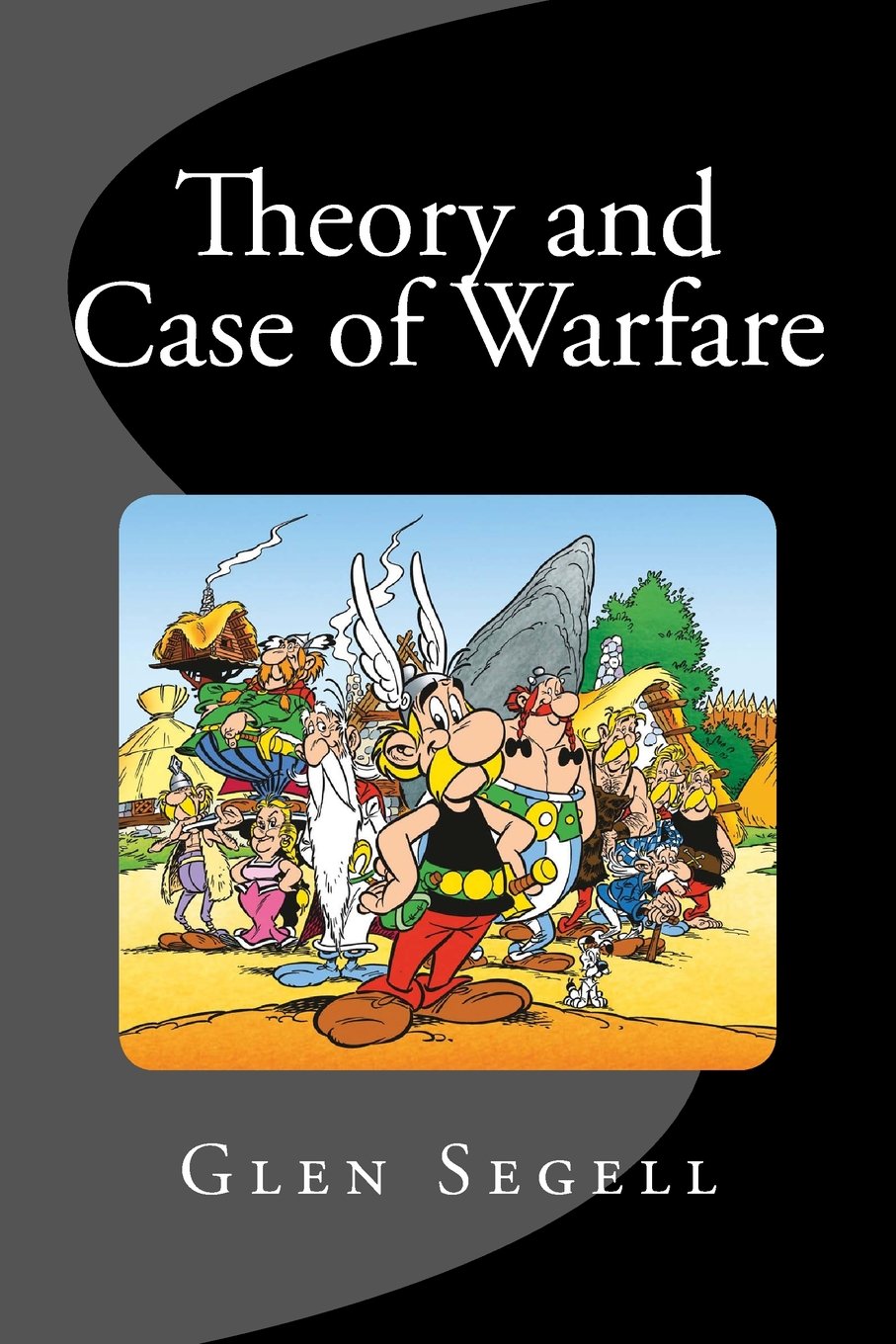
Theory and Case of Warfare (2017)
(Click on the picture to enlarge)
This book considers the theory of warfare as known prior to the 20th Century and then takes a small step to establish a conceptual framework for discussion of command approaches in the 21st Century. Five chapters of cases detail types of warfare. These are: strategic bombing as an examination of ends, ways, and means during the Great War; The US Army's vision of warfare in the 21st Century; non-lethal weapons and force-casualty aversion in 21st century warfare; C4ISR in Operation Iraqi Freedom; and strategic communications population-centric counterinsurgency. It concludes that the past will continue where soldiers will meet soldiers on the battlefield. In addition there are also new types of enemies, battlefields and technologies that will emerge. These need to be considered and faced hence introducing new theories of warfare, namely how wars should be fought.
The Islamic State Delusion (2016)
This study traces the origins of the Islamic State to 1999 when Jordanian militant Abu Musab al-Zaraqawi established Al Qaeda in the Land of the Two Rivers. It examines how it has managed to spread its influence into Africa, the Caucasus and the Far East. Despite having a vast number of forces arrayed against it the Islamic State is growing stronger. Reasons for the resilience displayed on the part of the Jihadis include encouraging polarization between groups and then benefiting from this process and its diverse funding sources from oil sales to the trafficking of antiquities and narcotics. It has deployed soft power and displayed superior military strategy combining conventional military doctrine with asymmetric warfare. Current counter-terrorism strategies to degrade and destroy Islamic State are not working. There is no quick-fix military solution to the challenged posed by Islamic State such as the decapitation of the leadership and aerial strikes against key Islamic State command and control positions. There is a deterioration of the Sunni-Shia divide in the region. The phenomenon of Islamic State will continue to grow in the short to medium term. Part of the reason for this relates to the fact that the reformation of Islam has largely stalled on account of the fight back from more conservative clerics. Demographic and environmental variables are also serving to fuel religious fundamentalism globally. It is delusional to believe that it can be overpowered overnight while it is delusion for the Islamic State to believe that it can succeed. A distinctive contribution to literature; an essential and priority read.
Israel, Gaza and Hamas 2014: Operation Protective Edge (2015)
Israel, Gaza and Hamas 2014: Operation Protective Edge in numbers: 50 days of fighting; 4,258 rockets fired at Israel; 735 Iron Dome interceptions; 5,226 air strikes; 32 tunnels destroyed; 74 dead on the Israeli side; and some 2,200 dead on the Palestinian side. The historical chronology of the accumulation of these on a daily basis can be reaped from on-line newspaper sources. This book goes behind the scenes to analyze the thinking at the time, from the Israel side, on Strategy and Tactics, Comparing Operations Cast Lead, Pillar of Defense and Protective Edge, Missile and Rocket Warfare and Protection, The Tunnels and the Cyber, Legal Issues and Demilitarization, Deterrence and Leverage, Intra-Palestinian Processes, The Civilian Front and Public Opinion and Beyond the Military Front. The goal of victory in a war is the destruction of the enemy’s army. This volume concludes that in Operation Protective Edge neither side achieved victory in this sense. The 50 days of fighting didn't resolve the Israel-Palestinian impasse. The door is open for a future Israel, Gaza and Hamas armed conflict. The ball is in the court of the counselors.
Civil-Military Relationships in Developing Countries (2013)
This book examines two sides of civil–military relations in developing countries. One is the place of civil-military relations within a state’s political and economic systems; the other is the role of the military on a state’s maintenance of peace and stability. The book thus proposes that the function of soldiers is not only to defend and deter, but also to develop. The chapters provide a comprehensive analysis of civil–military relationship with comparative cases on Botswana, China, El Salvador, Honduras, Guatemala, India, Indonesia, Nicaragua, Nigeria, Pakistan, and The Arab Spring Countries of the Middle East including Bahrain, Sudan, Iraq, Jordan, Saudi Arabia, Egypt, Tunisia, Yemen and Libya. Each chapter analyzes the historical, cultural and political factors that shape the direction of the man on the white horse (military elite) and the politician. In doing so, this book reveals the potential impact of the nature of civil military relations on democratization, political and economic development, and on regional/international security.
Articles:
?For how much longer will Hamas be a proxy of Iran
The Legacy of the Obama Administration by Dr Glen Segell